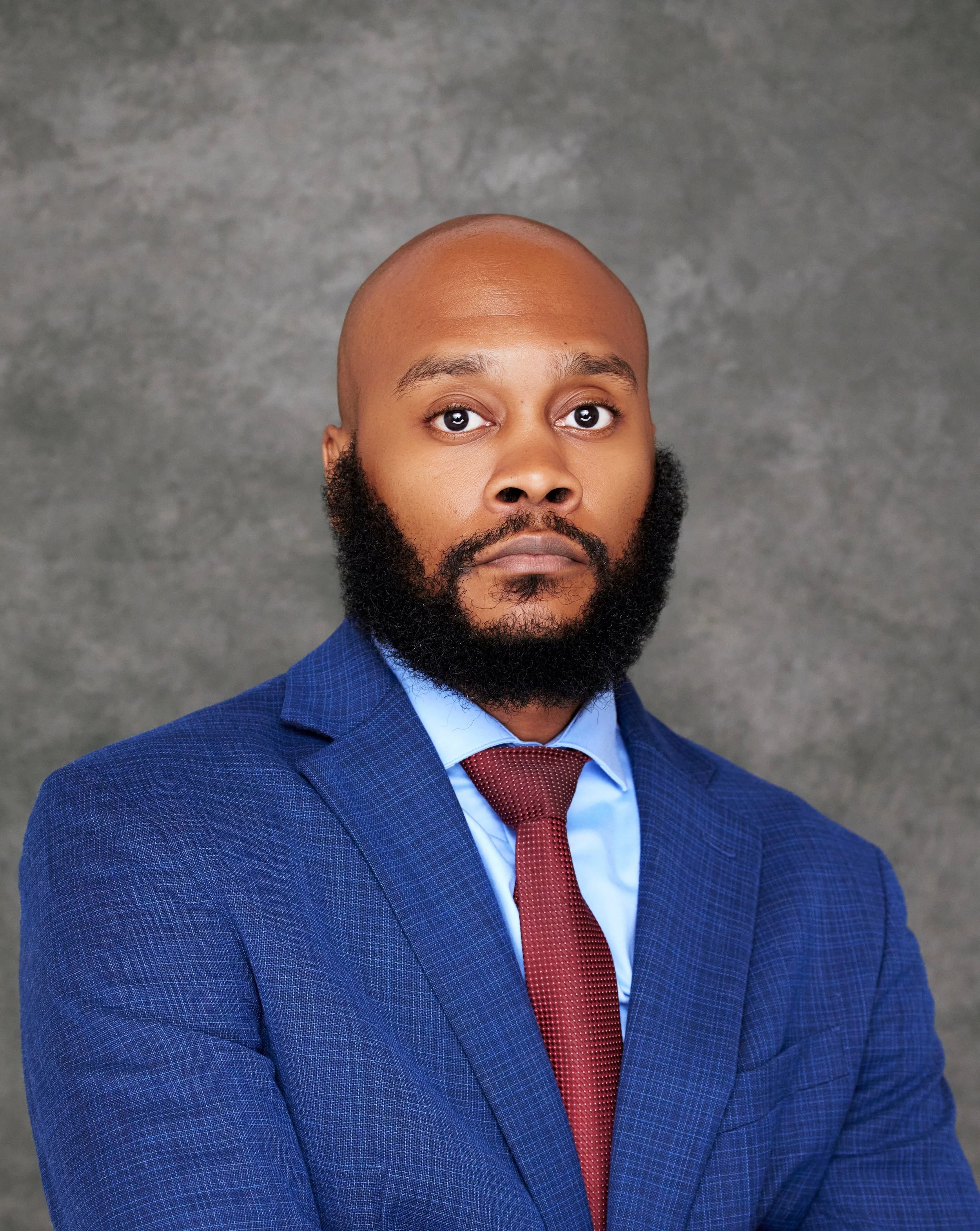
Hi, I’m E. Michael Watts, LCSW.
As a licensed clinician, clinical supervisor, and training facilitator, my role is to present learning as a process of active discovery and to structure the conversation in a way that enables others to effectively accommodate the new material. I center my trainings on participants’ learning of the content, development of cultural competence, and on increasing sociopolitical consciousness.
Additionally, my approach to clinical supervision is focused on increasing 1) clinician self-awareness and 2) clinical competency by identifying clinicians’ developmental levels, improving cognitive processing (or recognizing new examples of something, noting similarities and differences), schema development and refinement (i.e., refining existing schema in light of new information), and skill development through accurate and relevant feedback. The overarching goal of this approach is to move clinicians toward ever-increasing clinical autonomy and competence.
My Experience
E. Michael Watts, LCSW is an experienced clinical leader with a strong foundation in community behavioral health, serving in roles ranging from Mental Health Clinician to Clinical Director within organizations dedicated to accessible, research-informed care. His career includes years of direct service in county jails, hospitals, crisis response programs, and community-based treatment centers, where he has worked to expand high-quality services for individuals facing complex mental health and substance use challenges. He is exceptionally committed to advocating for justice-involved and economically marginalized populations, drawing on deep experience building community partnerships and developing programs that improve outcomes for underserved clients. He brings a supervision and training style grounded in collaboration, focused on participant learning, cultural competence, and sociocultural awareness.
The Grand Challenges of Social Work Promoting Smart Decarceration
My rationale for focusing the work on forensic populations is inspired by the Grand Challenges of Social Work and my professional experience in the field. Please check out the video above that features Dr. Carrie Pettus, the founder of the Smart Decarceration Initiative. More about Promoting Smart Decarceration can be found here.

Key concepts, real impact. Thoughtfully crafted to focus on what matters most.
The Developing Person (Individual / Ontogenic)
How development itself — cognitive, emotional, identity formation across adolescence and young adulthood — shapes vulnerability to and recovery from justice involvement. The lens that grounds everything else: risk and resilience aren't fixed traits, they're stages.
Home, School, and the Systems Closest to Us (Microsystem & Mesosystem)
Where educational attainment lives: the classroom, the family, the peer group, and what happens when those systems talk to each other — or don't. Explores how school disruption and disconnection function as early justice-system on-ramps, and how reconnection functions as exit ramps.
Mind and Body (Individual systems interacting with environment)
Mental health, substance use, and physical health as interconnected — not parallel — forces in justice trajectories. Focuses on how untreated conditions get criminalized, and how integrated care interrupts that pattern at both the front end and the back end.
The Systems Behind the Systems (Exosystem)
The institutions people rarely see but are shaped by anyway: courts, agencies, funding structures, policy design. Examines how systems that never touch a person directly still determine their outcomes.
Culture, Community, and the Water We Swim In (Macrosystem & Chronosystem)
Sociocultural context — race, class, community history, generational change — and how it sets the conditions under which everything above either protects people or exposes them. The long view: how these forces shift over time, and what that means for prevention and repair.